Foundation
Rao Bika, of the Rathore house, began building the city. The name joins his own with ner, meaning place. The surrounding country had been known as Jangladesh.
Bikaner (SC) · Rajasthan · Parliamentary constituency
A desert constituency in the north-west of Rajasthan: eight assembly segments spread across a district of more than thirty thousand square kilometres, built around a city founded in 1488 and reshaped in the twentieth century by canal water and the railway.
The parliamentary constituency is reserved for the Scheduled Castes and comprises eight Vidhan Sabha segments.
Bikaner sits in the Thar Desert of western Rajasthan, roughly 330 kilometres north-west of Jaipur, in a region historically known as Jangladesh — a barren country before the city was founded.
It is a landscape of extremes. Summer temperatures pass 48°C; winter nights fall below freezing. Annual rainfall averages around 290 millimetres, and arrives irregularly. The 2011 Census recorded a district area of 30,247 square kilometres with a population of 23,63,937 — a density of roughly 78 persons per square kilometre, among the lowest in India.
Two pieces of engineering changed what the land could carry. The Gang Canal, completed in the late 1920s, and the Indira Gandhi Canal, completed in 1987, brought water into the northern desert and made irrigated agriculture possible where it had not been. Much of what distinguishes the northern segments of the constituency — Anupgarh, Khajuwala — from the southern ones follows from that water.
DatedArea and population figures are from the Census of India 2011 and are reproduced with that date. District boundaries in Rajasthan have since been subject to administrative reorganisation.
Rao Bika, of the Rathore house, began building the city. The name joins his own with ner, meaning place. The surrounding country had been known as Jangladesh.
Built under Raja Rai Singh. Unusually among the major forts of Rajasthan, it does not stand on a hill; it is a fortress of the plain.
The long reign under which the canal, the railway and much of the modern institutional fabric of Bikaner were established. He sat in the Imperial War Cabinet during the First World War.
Designed for Maharaja Ganga Singh by the British architect Samuel Swinton Jacob, in the Indo-Saracenic manner.
Established at Bikaner for research on and development of the camel — an institution particular to this landscape.
About thirty kilometres from the city, dedicated to Karni Mata, and among the best known places of pilgrimage in the region.
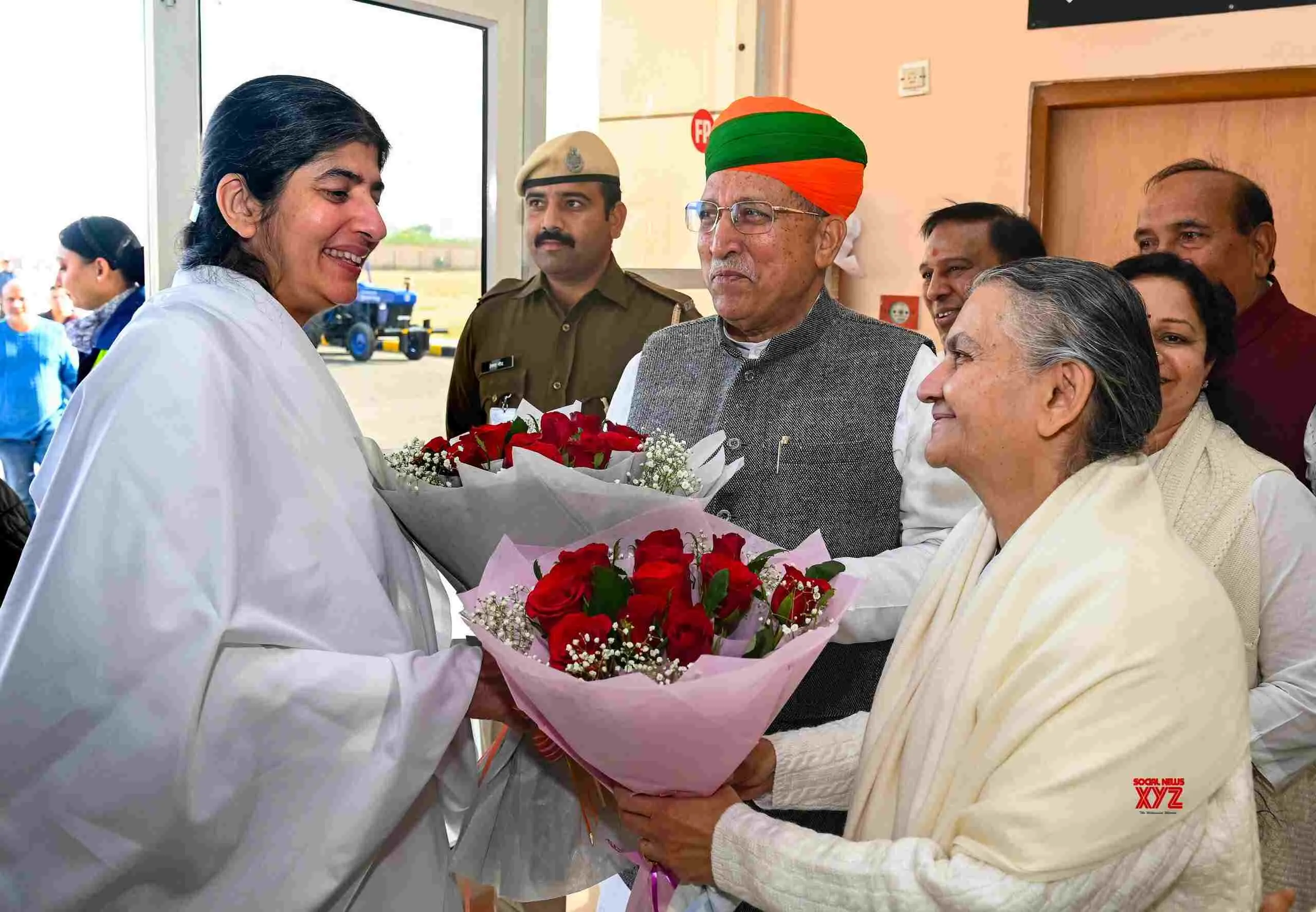
Shri Arjun Ram Meghwal was first elected from Bikaner (SC) in 2009 and has been returned at each general election since — 2014, 2019 and 2024. At the most recent election he polled 5,66,737 votes, a margin of 55,711 over the runner-up, on a turnout of 54.58 per cent.
The seat has a long parliamentary history. It was contested from the first general election, and among those who have represented it are Dr. Karni Singh, who held it as an Independent through the 1950s and 1960s, and Chaudhary Balram Jakhar, a former Speaker of the Lok Sabha.
These are the structural subjects that the geography and economy of the region produce. They are described as context. No constituency-level project, scheme or outcome is attributed here to any individual, because the sources consulted for this record do not establish one.
Canal water is the defining variable of the northern segments. Distribution, groundwater quality and drinking-water supply in outlying villages are recurring subjects across desert districts.
An economy built on irrigated and rain-fed cultivation in a region averaging under 300 millimetres of rain a year, alongside animal husbandry.
A population density of about 78 persons per square kilometre means long distances between settlements, and connectivity — road, rail, telecommunications — is a structural rather than incidental issue.
The constituency is reserved for the Scheduled Castes. The official parliamentary record notes long-standing engagement by the Member with questions of social justice, including the abolition of manual scavenging, raised by him in the 15th Lok Sabha.
The official record notes his participation in programmes for the development of the Rajasthani language and his cooperation towards its recognition in the Eighth Schedule of the Constitution.
Parts of the district lie along the international border, which shapes land use, infrastructure and administration in the western and northern segments.
Open the public issues archive
Sources