17 sectionsPublic record — informationalarjunrammeghwal.in
Section 07Folio 07 / 17
Law & Justice
Three departments, a constitutional framework for the higher judiciary, a national digitisation programme, and a statutory duty of legal aid. This section sets out the institution first, and the ministerial record second.
07
Clause 1Institutional scope
The three departments
The Ministry of Law and Justice is unusual among Union Ministries in being divided into three departments, each with a distinct function.
1.1
Legislative Department
Drafts the principal legislation of the Union Government and the subordinate legislation made under it, translates and publishes the statute book, and administers election law. When a Bill is introduced in Parliament, this is the department in which its text was prepared.
1.2
Department of Legal Affairs
Advises the Government of India on legal questions referred to it, conducts the Government’s litigation, and handles policy on arbitration and alternative dispute resolution, including the India International Arbitration Centre.
1.3
Department of Justice
Deals with the administration of justice: the appointment of Judges to the Supreme Court and the High Courts, judicial infrastructure, the computerisation of courts under the eCourts project, Fast Track Special Courts, and access-to-justice schemes including legal aid.
Clause 2Judicial strength
Appointments and sanctioned strength
Every figure below is a dated parliamentary record, not a current statistic. Judicial strength changes continuously; a number is only meaningful with the date on which it was stated to Parliament.
Appointments to the Supreme Court and the High Courts are made under Articles 124, 217 and 224 of the Constitution. As the Ministry stated to Parliament in February 2026, those Articles “do not provide for reservation for any caste or class of persons”. Under the Memorandum of Procedure, proposals for appointment to the Supreme Court are initiated by the Chief Justice of India, and proposals for a High Court by the Chief Justice of that High Court; only persons recommended by the Supreme Court collegium are appointed.
The Government’s stated position is that it requests Chief Justices to give due consideration to suitable candidates from the Scheduled Castes, Scheduled Tribes, Other Backward Classes, minorities and women when sending proposals, in order to improve social diversity on the bench.
906 → 1,122
Sanctioned strength of High Court Judges
From May 2014 to the date of the reply. Stated in a reply of 25 July 2025.
70
Judges appointed to the Supreme Court
Between 1 May 2014 and 21 July 2025. Stated in a reply of 25 July 2025.
1,058
New Judges appointed to the High Courts
Over the same period; a further 794 Additional Judges were made permanent.
170
Women Judges appointed to the High Courts since 2014
Including 96 in the preceding five years, with six appointed to the Supreme Court. Position as on 2 February 2026.
Clause 3eCourts
Digitising the courts
The eCourts Mission Mode Project is run by the Government of India in collaboration with the eCommittee of the Supreme Court of India. It is an institutional programme spanning more than a decade and several office-holders.
Phase I & II
ICT enablement
18,735 district and subordinate courts computerised to 2023; wide-area network connectivity provided to 2,977 sites; video-conferencing enabled between 3,240 court complexes and 1,272 jails; 778 e-Sewa Kendras established.
Phase III
2023–2027
Approved on 13 September 2023 with an outlay of ₹7,210 crore. Aimed at digital, online and paperless courts, digitisation of legacy and pending records, cloud-based repositories, e-Sewa Kendras across all court complexes, and the use of artificial intelligence in case management and transcription.
Selected eCourts figures as stated to Parliament
As on
Measure
Figure
31 Dec 2025
Cases heard by video conferencingHigh Courts and District Courts
3,93,22,695
31 Dec 2025
Cases submitted through e-filing
1,03,96,720
31 Dec 2025
e-Sewa Kendras functioning
2,331
31 Dec 2025
Challans paid through 29 Virtual CourtsRealising ₹9,73,25,50,414 in challan amount
94,55,288
31 Dec 2025
Justice Clocks installed
37 High Courts, 30 District Courts
30 Jun 2025
Court halls under the judicial infrastructure scheme15,818 as on 30 June 2014
22,372
30 Jun 2025
Residential units for judicial officers10,211 as on 30 June 2014
19,851
30 Jun 2025
Released under the judicial infrastructure scheme since 1993–94
₹12,101.89 crore
Scroll the table sideways to read every column.
Dated record These figures were stated to Parliament in replies of 25 July 2025 and 13 February 2026 and apply to the dates shown. They are not presented as the position today.
Clause 4Access to justice
Legal aid, Tele-Law and DISHA
Article 39A of the Constitution directs the State to secure that the legal system promotes justice on a basis of equal opportunity, and to provide free legal aid so that opportunities for securing justice are not denied by reason of economic or other disabilities. The National Legal Services Authority, constituted under the Legal Services Authorities Act, 1987, provides free legal services to the categories covered by Section 12 of that Act and organises Lok Adalats, through institutions from the taluk courts up to the Supreme Court.
Alongside this statutory structure, the Department of Justice runs a Central Sector Scheme called DISHA — Designing Innovative Solutions for Holistic Access to Justice. The scheme ran from 2021 to 2026 with an outlay of ₹250 crore and three components: Tele-Law, which provides free pre-litigation advice through Common Service Centres at the Gram Panchayat level; Nyaya Bandhu, which connects pro bono advocates with eligible beneficiaries; and a legal literacy and legal awareness programme.
DISHA 2.0
Ministerial decision — 22 June 2026
On 22 June 2026, Shri Arjun Ram Meghwal, as Minister of State (Independent Charge) for Law and Justice, approved the continuation of the scheme in restructured form as DISHA 2.0, for five years from 1 April 2026 to 31 March 2031, co-terminous with the Sixteenth Finance Commission cycle. The approved outlay is ₹255 crore, funded entirely through Gross Budgetary Support. The scheme was appraised and recommended by a Standing Finance Committee chaired by the Secretary, Department of Justice.
DISHA 2.0 carries forward Tele-Law, Nyaya Bandhu and the legal literacy programme, and adds a fourth component, VIDHI–Sanjeevani: a centralised digital platform with an integrated dashboard and an AI-powered multilingual chatbot, Nyaya Setu, developed with BHASHINI. The stated target is a cumulative outreach of three crore beneficiaries.
DISHA, 2021–2026 — as on 31 May 2026
Cumulative outreach
2.37 crore+
Tele-Law advices
1.13 crore+
Pro bono advocates
10,681
Pro Bono Clubs
109 in 31 States/UTs
Legal literacy reach
1.24 crore+
Original outlay
₹250 crore
SourcePress Information Bureau, Ministry of Law and Justice, 22 June 2026 (Release ID 2276525).
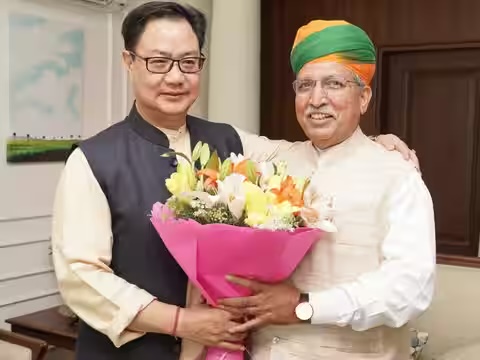
Plate 01At the Ministry of Law and Justice.
Clause 5Speedy trial
Fast Track Courts and Fast Track Special Courts
Fast Track Courts are set up by the States and Union Territories in consultation with the respective High Courts. The Fourteenth Finance Commission recommended 1,800 such courts for the period 2015–2020 for the expeditious trial of specified categories of case, including heinous crimes and cases involving women, children, senior citizens and persons with disabilities. No central assistance is provided for these courts.
Separately, a Centrally Sponsored Scheme for Fast Track Special Courts, including exclusive POCSO courts, was launched in October 2019 for the time-bound trial of cases relating to rape and offences under the Protection of Children from Sexual Offences Act, 2012. The scheme has been extended twice, most recently to 31 March 2026, for the establishment of 790 courts. Third-party evaluations by the National Productivity Council (2021), the Indian Institute of Public Administration (2023) and, most recently, NITI Aayog through an advisory firm have each recommended its continuation.
Clause 6Dispute resolution
Arbitration and alternative dispute resolution
Arbitration policy sits with the Department of Legal Affairs. The stated objective is to move commercial dispute resolution away from ad hoc arrangements and towards institutional arbitration, with the India International Arbitration Centre as a globally competitive institution.
A National Conference on “Institutional Arbitration: An Effective Framework for Dispute Resolution” was organised by the Department of Legal Affairs with ONGC and the India International Arbitration Centre at Bharat Mandapam, New Delhi, on 14 June 2025. Shri Arjun Ram Meghwal attended as Guest of Honour. In his address he linked India’s modern legal aspirations to its older tradition of consensual dispute resolution, and stated: “India will become the arbitration hub.”
At the Twelfth Session of the Justice Ministers’ Meeting of Shanghai Cooperation Organisation Member States on 29 October 2025, at which he represented India by video conference, he set out the Government’s emphasis on free legal aid, the launch of E-Lok Adalat, and the priority given to resolving disputes through alternative dispute resolution and to business-facilitating laws including the Commercial Courts Act and the arbitration and conciliation laws. A joint statement was adopted at that session.
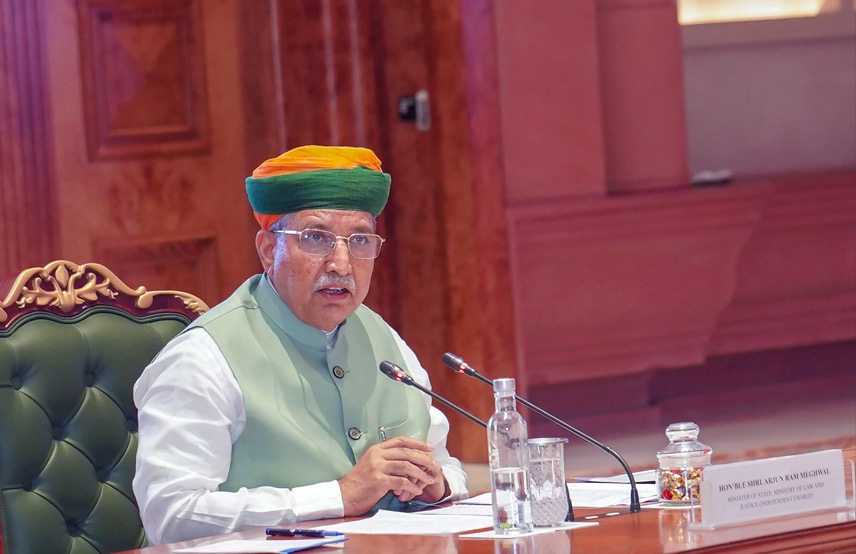
Plate 02Addressing a formal conference from the chair.
India will become the arbitration hub.
Shri Arjun Ram Meghwal — National Conference on Institutional Arbitration, Bharat Mandapam, 14 June 2025. Press Information Bureau, Release ID 2136475.
Sources for this section
1Press Information Bureau, Ministry of Law and Justice — “Efficiency and Effectiveness of the Judicial System”, 25 July 2025 (Release ID 2148360). Reply given by the Minister of State (Independent Charge) of the Ministry of Law and Justice.
2Press Information Bureau, Ministry of Law and Justice — “Justice Delivery System Through Digitization”, 13 February 2026 (Release ID 2227720).
3Press Information Bureau, Ministry of Law and Justice — “Impact of Fast Track Courts”, 5 February 2026 (Release ID 2223645).
4Press Information Bureau, Ministry of Law and Justice — “Women Judges in Judiciary”, 6 February 2026 (Release ID 2224358).
5Press Information Bureau, Ministry of Law and Justice — DISHA 2.0 approval, 22 June 2026 (Release ID 2276525).
6Press Information Bureau, Ministry of Law and Justice — Department of Justice legal aid initiatives, 6 December 2024 (Release ID 2081476). Reply given by the Minister of State (Independent Charge) in the Lok Sabha.
7Press Information Bureau, Ministry of Law and Justice — National Conference on Institutional Arbitration, 15 June 2025 (Release ID 2136475).
8Press Information Bureau, Ministry of Law and Justice — Twelfth Session of the SCO Justice Ministers’ Meeting, 29 October 2025 (Release ID 2183882).